Establishing a Green Network Setup for Green Communication
With the ever-increasing demand for communication and the growth of the internet of things (IoT), the energy consumption of communication networks has become a significant concern. Green communication and networking aim to reduce the energy consumption and environmental impact of communication networks while maintaining the quality of service for users. In this article, we will explore the concept of green networking and how to establish a green network setup for green communication.
Understanding Green Communication
Green communication refers to the implementation of hardware or software techniques in the Information and Communication Technology (ICT) sector that aim to reduce energy consumption. It is motivated by the need to mitigate environmental pollution and reduce economic costs associated with ICT operations. Green communication involves reducing the energy consumption of communication networks, networks, and devices, as well as using renewable energy sources, energy-harvesting technologies, and energy-efficient protocols.
Key Components of a Green Network Setup
A green network setup for green communication consists of several key components: energy-efficient routing protocols, green network architectures, renewable energy integration, optimization techniques, and policy considerations. Energy-efficient routing protocols, such as green routing protocols and distance-vector routing protocols, can reduce energy consumption by minimizing network congestion and packet loss. Green network architectures, such as Wireless Sensor Network (WSN) architecture, use low-power devices and reduce energy consumption by minimizing the number of devices and the number of transmissions.
Renewable Energy Integration
Renewable energy integration is essential for a green network setup. It involves using renewable energy sources, such as solar and wind energy, to power communication networks and devices. Renewable energy can reduce the carbon footprint of communication networks and decrease energy costs. Optimization techniques, such as dynamic frequency hopping, spatial multiplexing, and power-saving modes, can also reduce energy consumption and improve network performance. Additionally, policy considerations, such as energy regulations and green standards, can influence the design and implementation of green communication networks.
Benefits of a Green Network Setup
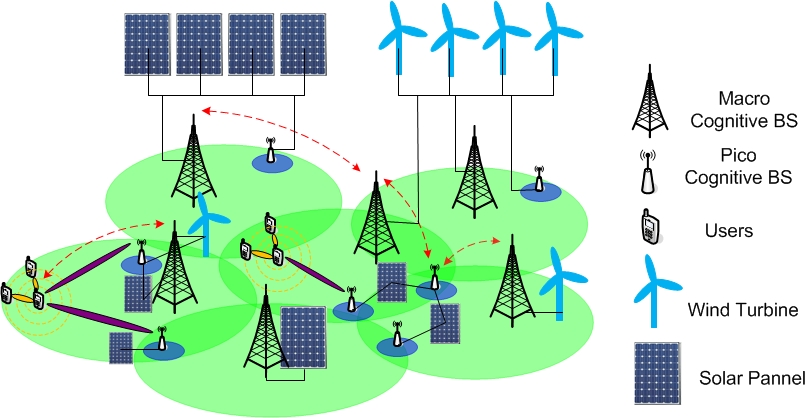
A green network setup for green communication offers several benefits, including reduced energy consumption, lower operational costs, and improved network performance. By reducing energy consumption, communication networks can decrease their carbon footprint and contribute to a more sustainable future. Additionally, green networks can improve network performance by reducing energy consumption, packet loss, and network congestion. This can lead to faster and more reliable communication, which is essential for businesses and individuals.
Challenges and Future Directions
Establishing a green network setup for green communication is not without its challenges. One of the primary challenges is the trade-off between energy efficiency and network performance. While green communication prioritizes energy efficiency, it can also compromise network performance if not implemented carefully. However, researchers and industry experts are working on overcoming this challenge by developing new energy-efficient technologies and protocols. The future of green communication and networking looks promising, with the integration of artificial intelligence (AI), Internet of Things (IoT), and 5G technologies. These technologies have the potential to revolutionize the communication industry and make it more sustainable.
Conclusion
In conclusion, establishing a green network setup for green communication is essential for reducing energy consumption and environmental impact while maintaining the quality of service for users. By understanding the key components of a green network setup, including energy-efficient routing protocols, green network architectures, renewable energy integration, optimization techniques, and policy considerations, communication networks can become more sustainable and environmentally friendly. As the demand for communication continues to grow, it is essential to develop green communication and networking solutions that prioritize energy efficiency and resource efficiency.
Key Takeaways
- Green communication refers to the implementation of hardware or software techniques in the ICT sector that aim to reduce energy consumption.
- A green network setup for green communication consists of several key components, including energy-efficient routing protocols, green network architectures, renewable energy integration, optimization techniques, and policy considerations.
- Renewable energy integration is essential for a green network setup, as it can reduce the carbon footprint of communication networks and decrease energy costs.
- A green network setup offers several benefits, including reduced energy consumption, lower operational costs, and improved network performance.
- Establishing a green network setup for green communication is not without its challenges, but researchers and industry experts are working on overcoming these challenges by developing new energy-efficient technologies and protocols.