Breaking Down the Science of Medical Weight Loss and GLP-1
Weight loss has long been a challenge for many individuals, with various methods and treatments being developed over the years. One of the most promising approaches in recent times is the use of glucagon-like peptide-1 (GLP-1) receptor agonists for medical weight loss. In this article, we will delve into the world of GLP-1, exploring its mechanisms, benefits, and applications in weight loss.
What are GLP-1 Receptor Agonists?
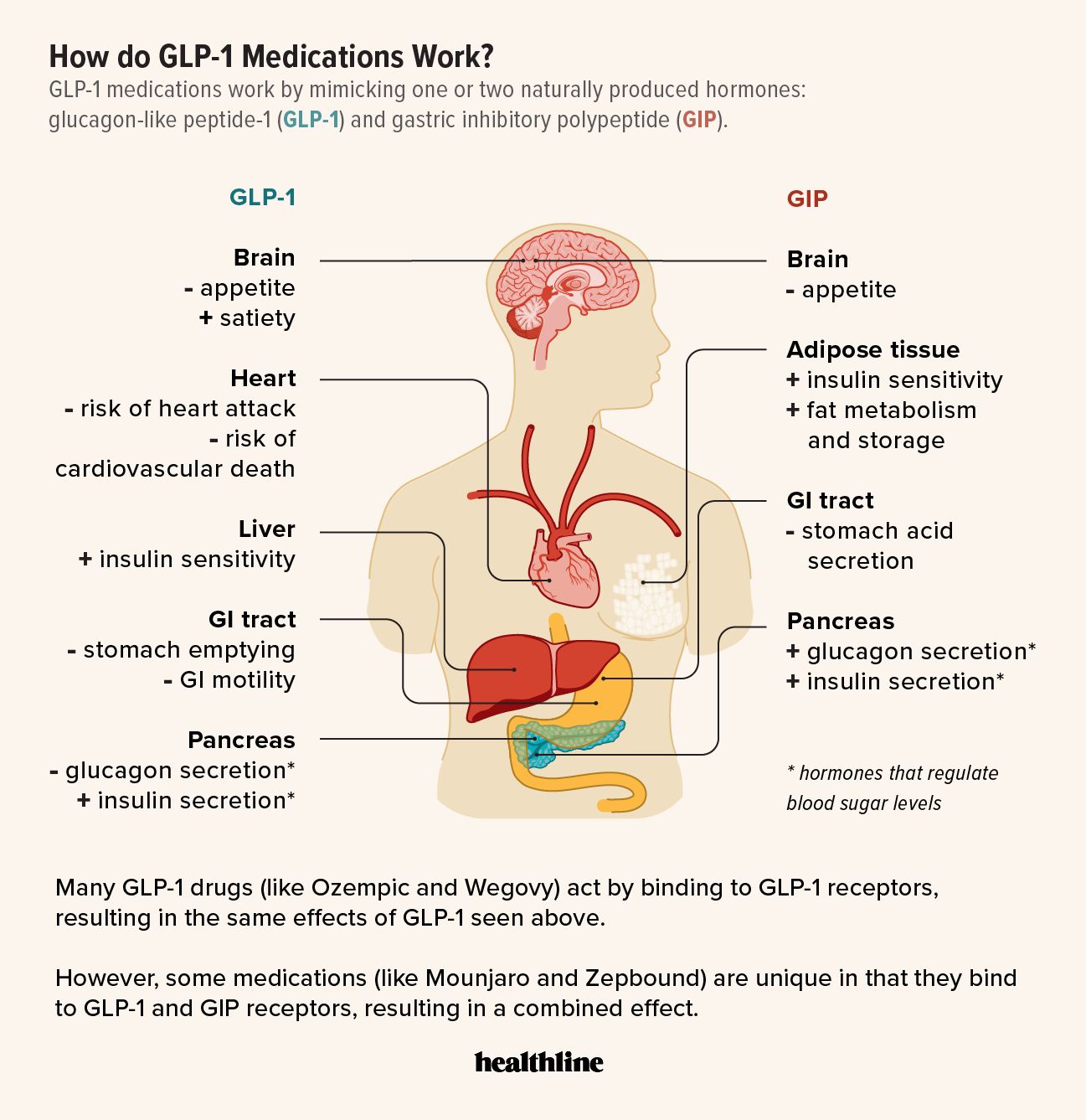
GLP-1 receptor agonists are a class of medications that work by mimicking the action of glucagon-like peptide-1, a hormone produced in the intestines. These hormones play a crucial role in glucose metabolism, appetite regulation, and weight management. GLP-1 receptor agonists increase insulin secretion, decrease glucagon levels, and delay gastric emptying, ultimately leading to weight loss and improved blood sugar control.
Applications in Weight Loss
- Originally developed for type 2 diabetes, GLP-1 receptor agonists have shown promise in weight loss management
- Combining GLP-1 receptor agonists with other metabolic targets or additional therapies has been increasingly licensed for weight loss and cardiometabolic applications
- Recent studies suggest that certain GLP-1 receptor agonists, such as tirzepatide, can deliver substantial weight reductions, averaging up to 22.5% of body weight
How Does GLP-1 Work?
GLP-1 works through several mechanisms to regulate appetite and weight management:
- Increased insulin secretion
- Decreased glucagon levels
- Delayed gastric emptying
- Reduced appetite and improved satiety
Benefits and Risks of GLP-1
While GLP-1 receptor agonists have shown significant promise in weight loss and diabetes management, they also come with potential risks and side effects, including:
- Ozempic face, a condition characterized by skin sagging and wrinkles on the face
- Nausea, vomiting, and diarrhea
- Muscle loss and weakness
- Interactions with other medications and potential for withdrawal symptoms when stopping treatment
Medical Weight Loss and GLP-1: A Customized Approach
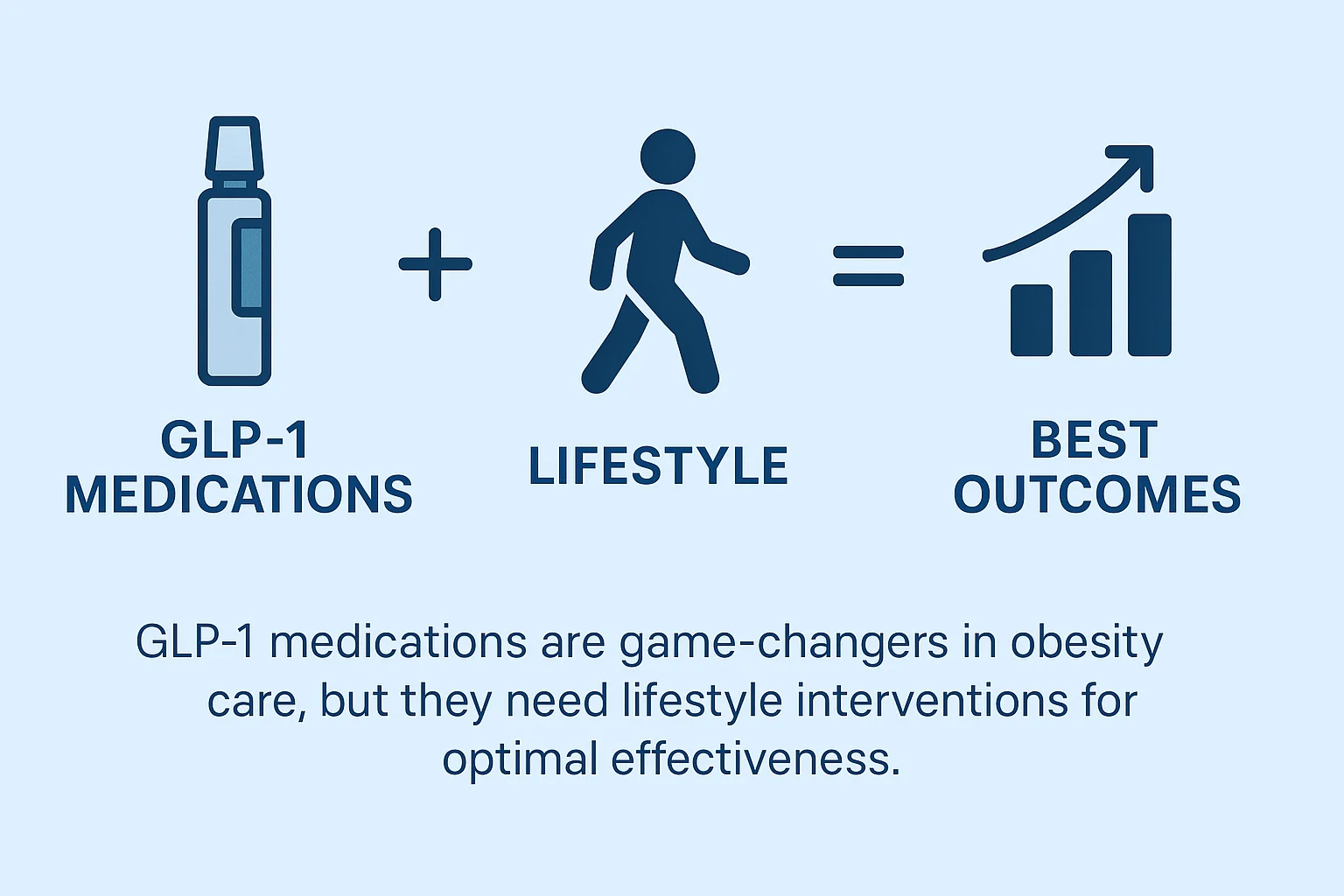
Medical weight loss is a tailored approach, supervised by a healthcare professional, incorporating diet charts, exercise, and lifestyle changes. GLP-1 receptor agonists can be used in conjunction with other treatments to optimize weight loss outcomes. A medical weight loss program can provide:
- Expert guidance and support
- Customized treatments and therapies
- Regular monitoring and adjustments
Overcoming Plateaus and Achieving Sustainable Weight Loss
While GLP-1 receptor agonists have shown significant promise in weight loss, plateaus can occur. To overcome this challenge and maintain weight loss, it is essential to:
- Work with a healthcare professional to adjust treatment plans and optimize results
- Monitor and adjust diet and exercise regimens
- Implement stress management and behavioral therapies to maintain motivation and adherence
Conclusion
Medical weight loss and GLP-1 receptor agonists represent a promising approach for weight management and diabetes control. By understanding the mechanisms of GLP-1 and its applications, individuals can make informed decisions about their treatment options. Combining GLP-1 with a medical weight loss program and adherence to a healthy lifestyle can lead to substantial and sustainable weight loss.
References:
- "The role of GLP-1 in the regulation of appetite and food intake"
- "GLP-1 receptor agonists for type 2 diabetes treatment: a review of the evidence"
- "Medical weight loss and GLP-1 receptor agonists: a customized approach to weight management"