Export License Requirements for International Trade: A Comprehensive Overview
The United States is a significant player in global trade, and businesses engaging in international commerce must navigate a complex regulatory landscape to ensure compliance with export license requirements. In this article, we will delve into the export license requirements for international trade, highlighting the significance of these regulations and the consequences of non-compliance.
Understanding Export License Requirements
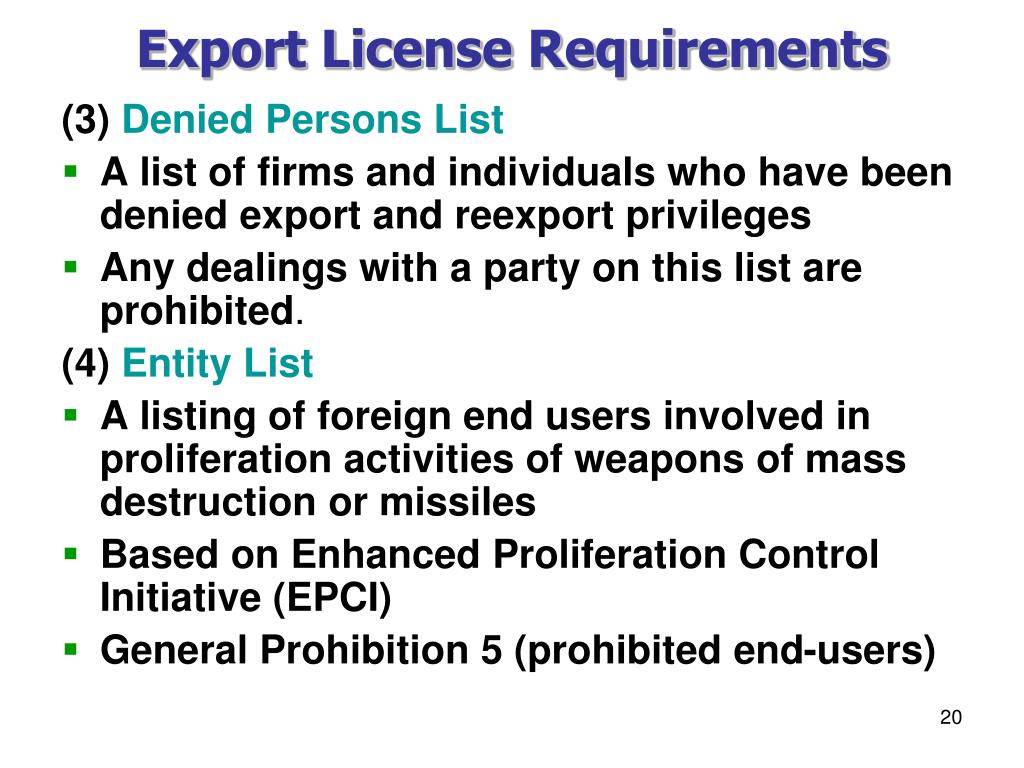
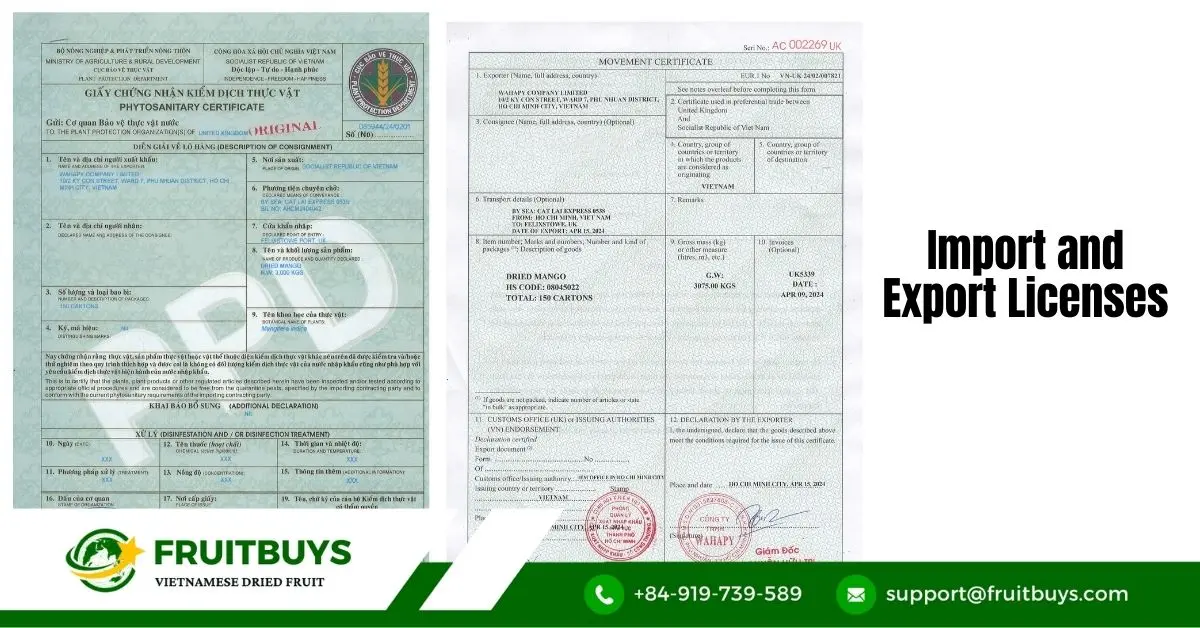
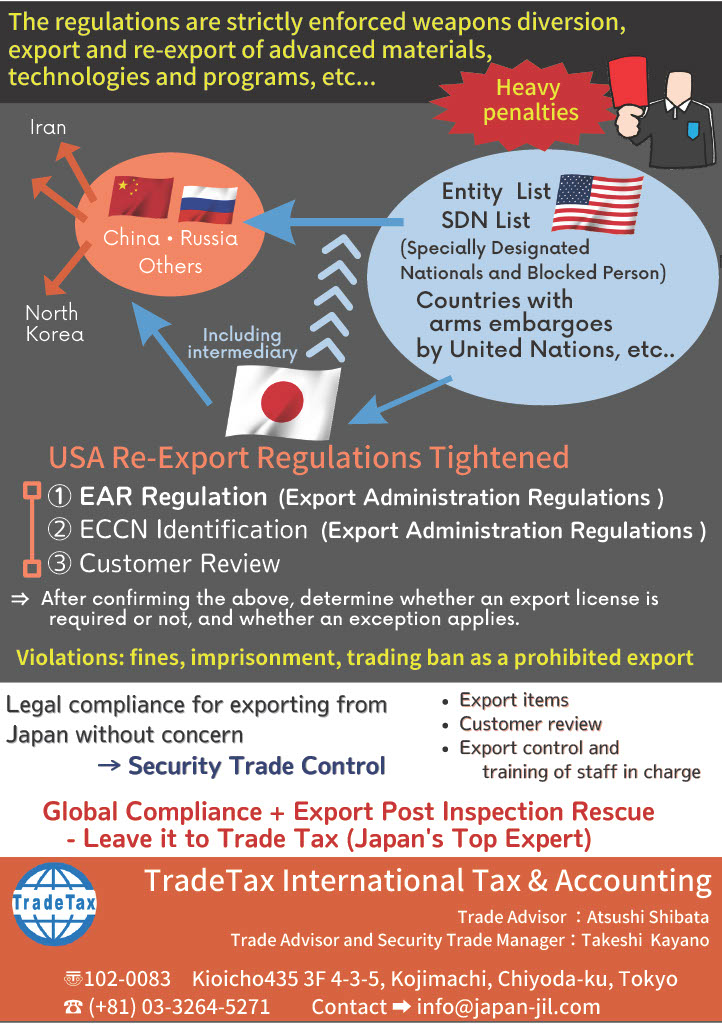
An export license is a government-issued document that authorizes the export of specific goods in specific quantities to a particular destination. The Export Administration Regulations (EAR) administered by the Bureau of Industry and Security (BIS) regulate the export of sensitive goods and technologies, while the International Traffic in Arms Regulations (ITAR) control the sale of defense items and defense services.
Types of Export License Requirements
- Commercial License Exceptions
- Technical Assistance Agreement (TAA)
- Military and Dual-Use Items
- Export Control Classification (ECCN)
Export Licensing Process
The export licensing process involves several steps, including:
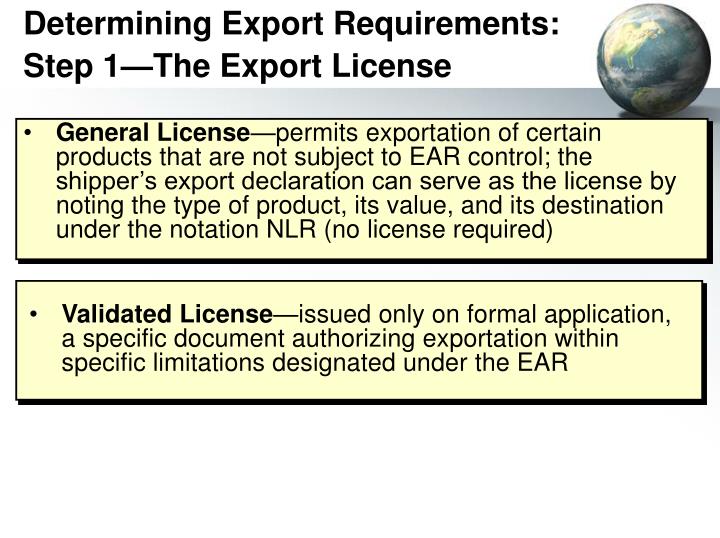
Step 1: Determine if an Export License is Required
The exporting entity must first determine if an export license is required for the specific goods being exported. This involves reviewing the Harmonized System (HS) code and the Export Control Classification Number (ECCN) associated with the goods.
Step 2: Complete the Electronic Export Information (EEI) Form
Once it is determined that an export license is required, the exporting entity must complete the Electronic Export Information (EEI) form, which is a mandatory reporting requirement for all U.S. exports.
Step 3: Apply for an Export License
The exporting entity must then submit an application for an export license to the relevant government agency. This involves providing detailed information about the goods being exported, including the HS code, ECCN, and other relevant details.
Step 4: Obtain an Export License
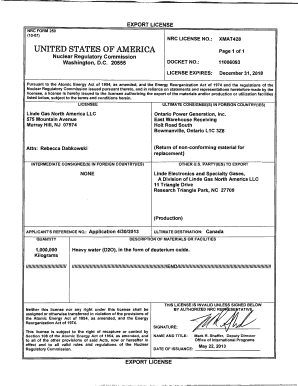
Once the application is reviewed and accepted, the exporting entity will be issued an export license, which is typically valid for a specified period of time.
Importance of Export License Requirements
Export license requirements play a critical role in ensuring that sensitive goods and technologies are transferred across borders in a controlled manner. Non-compliance with export license requirements can result in severe penalties, including fines, imprisonment, and reputational damage.
Consequences of Non-Compliance
- Fines and Penalties
- Imprisonment
- Reputational Damage
- Export Denials
Export License Requirements in the US
The United States has a complex regulatory framework governing export license requirements. The Export Administration Regulations (EAR) administered by the Bureau of Industry and Security (BIS) regulate the export of sensitive goods and technologies, while the International Traffic in Arms Regulations (ITAR) control the sale of defense items and defense services.
Import License vs. Export License
An import license is required for specific goods imported into the US, while an export license is required for specific goods exported from the US. The key difference between the two lies in the direction of trade – import trade involves goods entering the US, while export trade involves goods leaving the US.
Conclusion
Export license requirements are a critical aspect of international trade, ensuring that sensitive goods and technologies are transferred across borders in a controlled manner. Understanding the complexities of export licensing is essential for businesses engaging in international commerce to avoid non-compliance and its associated consequences. By following the steps outlined in this article, exporting entities can navigate the export licensing process with confidence and ensure compliance with export license requirements.
Finding Additional Resources
For more information on export license requirements, exporting entities can turn to the following resources:
- Bureau of Industry and Security (BIS)
- Export Administration Regulations (EAR)
- International Traffic in Arms Regulations (ITAR)
- Export Control Reform Act (ECRA)
By staying informed about the latest developments in export licensing, exporting entities can ensure compliance with export license requirements and navigate the complexities of international trade with confidence.