Laminate Flooring Plank Thickness: What You Need to Know
Laminate flooring has become a popular choice for homeowners and businesses seeking an affordable, durable, and aesthetically versatile flooring option. One of the key aspects to consider when selecting laminate flooring is its thickness. Laminate flooring thickness directly impacts its stability, sound absorption, and overall comfort.
Understanding Laminate Flooring Thickness
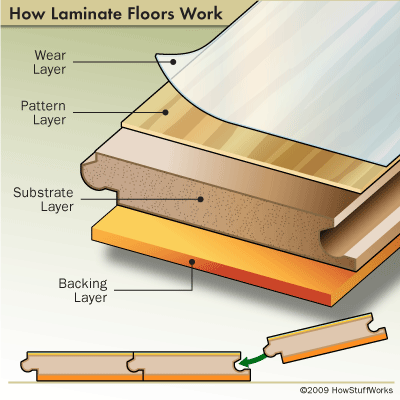
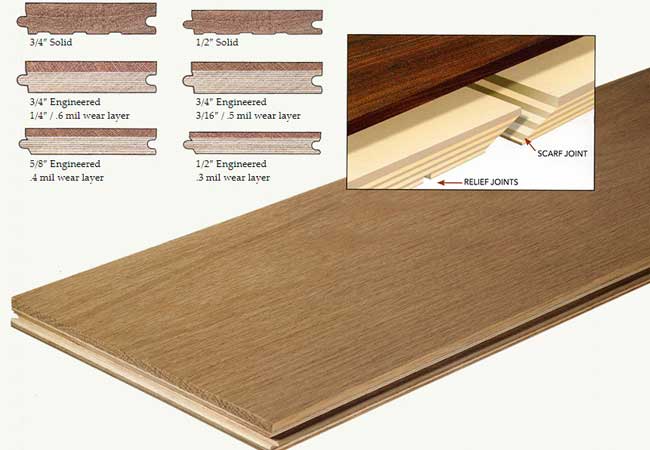
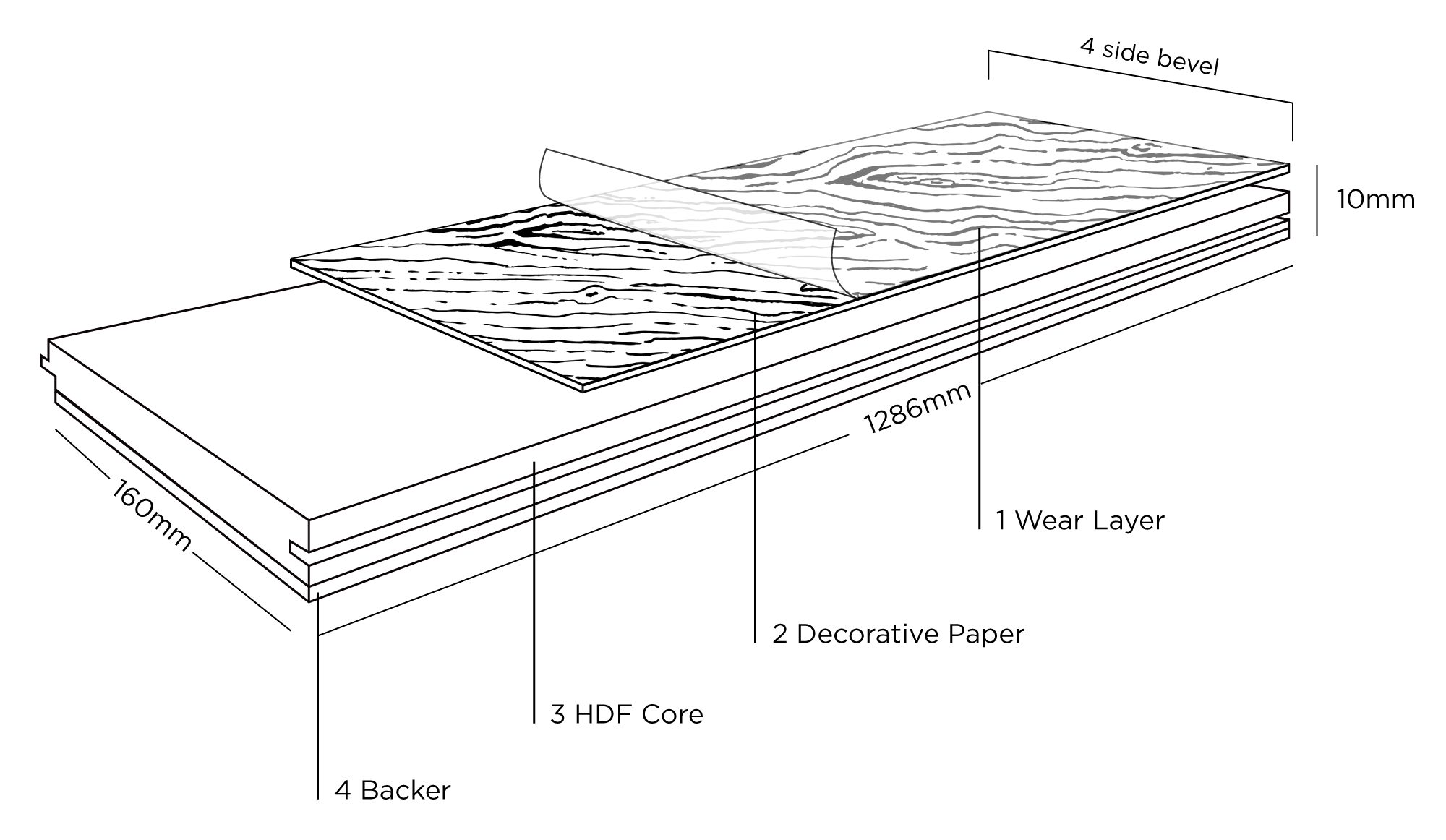
Laminate flooring thickness refers to the total height of each plank, measured in millimeters (mm). It includes the wear layer, the decorative layer, and the core. The wear layer is the topmost transparent layer that protects against scratches and stains, while the decorative layer is the photographic layer that mimics wood or stone. The core is the main structural component of the plank.
The Importance of Laminate Flooring Thickness
Laminate flooring thickness matters for comfort, performance, and compatibility with subfloors and underlayment. While many shoppers focus on design and color, thickness influences how a floor feels underfoot, how it wears over time, and how easy it is to install on different substrates.
- Comfort: Thicker laminate flooring planks tend to provide a more comfortable walking surface, as they are less prone to creaking and squeaking.
- Performance: Thicker laminate flooring planks are more resistant to wear and tear, and can withstand more foot traffic and heavy furniture.
- Compatibility: Thicker laminate flooring planks are more forgiving when installing on uneven subfloors and can provide better sound absorption.
Standard Laminate Flooring Thickness Ranges
In the United States, consumer options range from thin 6 mm planks to thicker 12 mm boards. Thicker boards offer more stability, a sturdier feel underfoot, and better sound performance on uneven subfloors. However, thickness is only part of the equation. Wear layer thickness, core design, and underlayment also play a crucial role in determining the overall performance of the laminate flooring.
Thicker Laminate Flooring Options
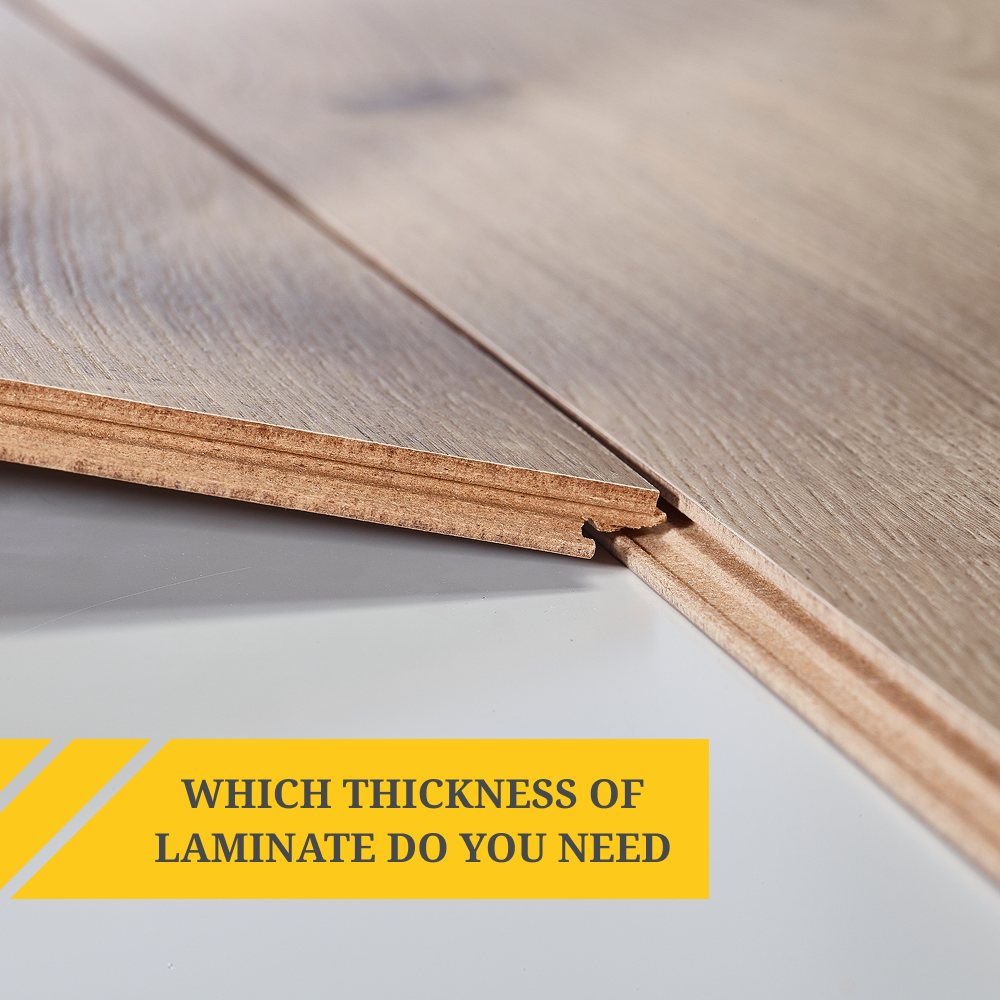
Higher quality laminate flooring that looks the most like hardwood flooring will be 10 to 12 mm thick and have a higher price tag. Thicker laminate flooring can provide a more realistic look and feel, and can be more forgiving when installing on uneven subfloors. However, it's essential to consider the additional cost and whether the benefits outweigh the investment.
Thinner Laminate Flooring Options
Thinner laminate flooring planks, typically ranging from 6 to 8 mm, are generally more affordable and can be a good option for budget-conscious consumers. However, they may not provide the same level of comfort, performance, and durability as thicker boards.
Ultimate Guide to Laminate Flooring Thickness
When selecting laminate flooring, consider the following factors:
- Your budget: Thicker laminate flooring options tend to be more expensive.
- Your lifestyle: If you have a busy household with multiple children or pets, thicker laminate flooring may be a better option.
- Your subfloor: If you have an uneven subfloor, thicker laminate flooring may be more forgiving.
- Your personal preference: If you prioritize comfort and performance, thicker laminate flooring may be the better choice.
Conclusion
Laminate flooring thickness is a critical factor to consider when selecting the right flooring option for your home or business. By understanding the importance of thickness and considering your budget, lifestyle, subfloor, and personal preferences, you can make an informed decision and choose the perfect laminate flooring plank thickness for your space.